
Petra in brief
Petra is an ancient caravan city in the south of Jordan, in the Ma'an Governorate, near today's town of Wadi Musa. It was the capital of the Nabataeans. According to the Petra authority, the city rose to prosperity through trade in incense, myrrh and spices.
The Nabataeans cut tombs, temples and monuments directly into the sandstone. UNESCO describes the site as a meeting of eastern and Hellenistic building traditions and stresses the water engineering: dams, tunnels, pipes, reservoirs and cisterns. No exact founding or building date is known, so dates for the earliest Petra are always approximate.
Key dates in the history of Petra
Only the dates that are firmly recorded. Earlier periods have no precise dates.
The Nabataean capital
Petra was the center of a wealthy trading kingdom. Caravans carrying incense, myrrh and spices passed through, and the city grew rich from that trade.
106 CE: Roman annexation
The emperor Trajan incorporated the Nabataean kingdom into the Roman Empire in 106 CE. Petra stayed regionally important afterward.
363 CE: the earthquake
The Petra authority names 363 CE as a severe destructive event. Changes in trade routes also contributed to the decline, so the story is not one of a city abandoned in a day.
1812: Burckhardt
The Swiss traveler Johann Ludwig Burckhardt brought Petra back to the attention of the Western world in 1812. Local Bedouin had never stopped knowing the place, so this was a rediscovery for outsiders only.
1985: World Heritage
UNESCO inscribed Petra on the World Heritage List in 1985 under criteria (i), (iii) and (iv). The listing highlights the rock-cut tombs and temples and the Nabataean water management.
Petra tours with a guide
Guided visits that explain the monuments and the Nabataean story, with live prices and availability.
The Nabataeans and their water
Petra sits in a dry landscape, and the city's survival depended on water. The Nabataean builders channeled and stored rainwater with dams, tunnels, pipes, reservoirs and cisterns, which is why UNESCO treats the water system as part of Petra's value alongside the monuments.
Water is still part of any visit. The US travel advisory of 29 August 2026 names Petra as an area at risk of flash floods, especially between October and March. Our best time to visit Petra guide covers the season in detail.
What the monuments were
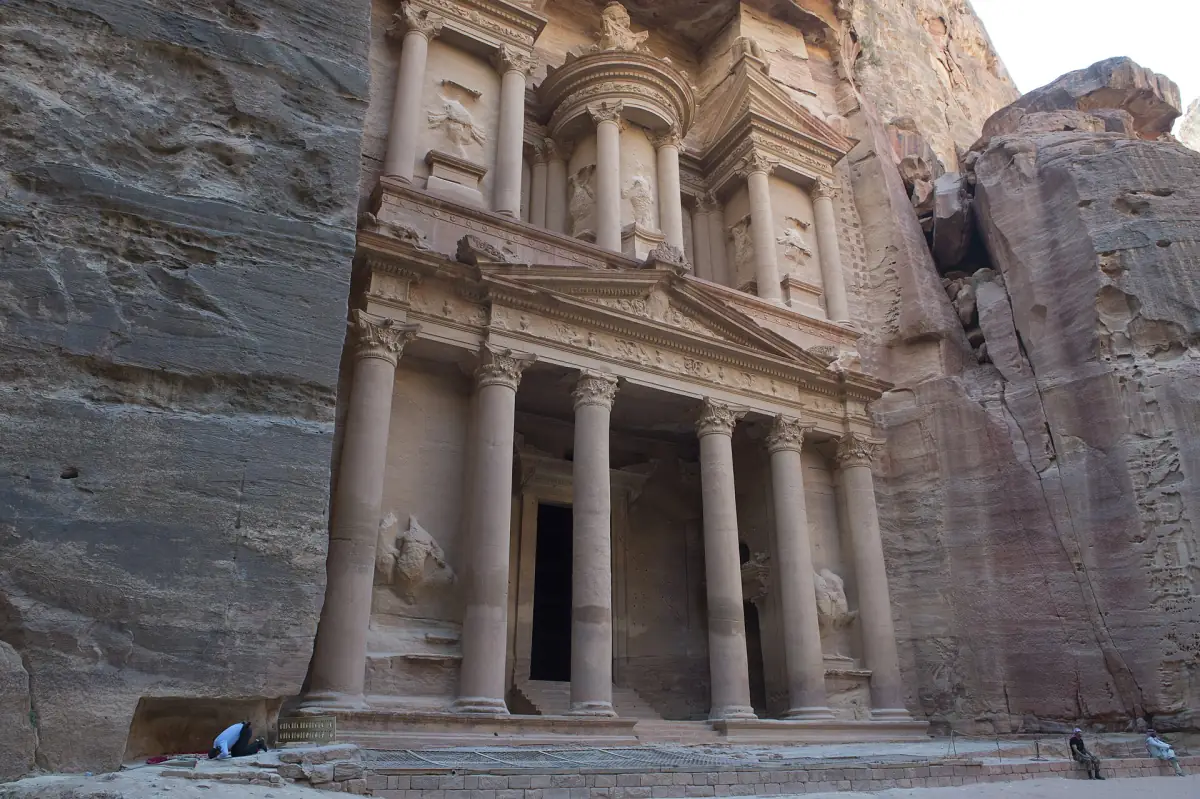
The Treasury, Al-Khazneh, is about 39.5 m high. The official trail description points to a mausoleum function and names the Nabataean king Aretas IV as a possible link. That is a hypothesis, not a proven burial.
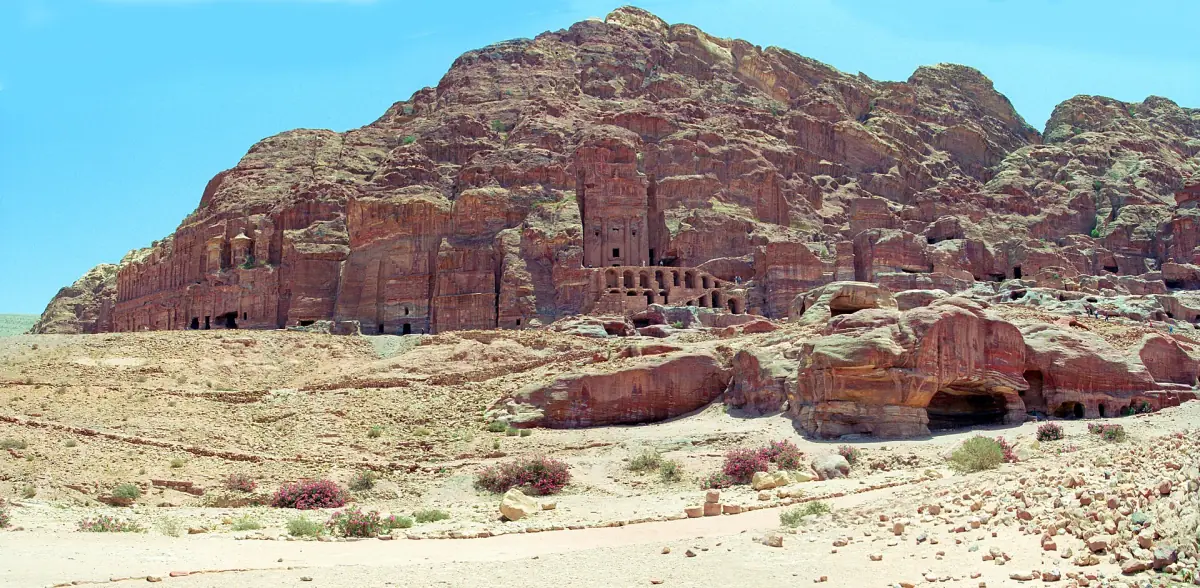
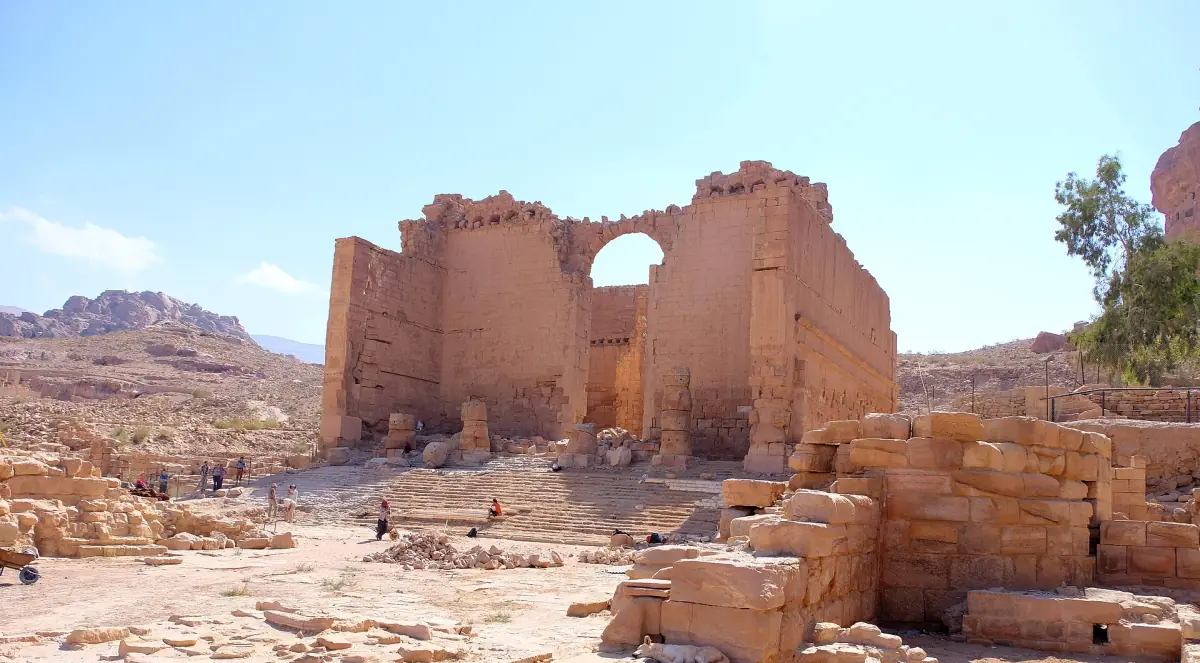
The original use of many other Petra monuments is not settled either. The Royal Tombs, the Palace Tomb, the theatre and the temple of Qasr al-Bint at the end of the Colonnaded Street are the other major stops on the main trail. The Monastery is a separate climb, described on our Monastery page.
Petra visitor numbers
Figures from the Petra authority as reported by the Jordan News Agency. They count visits, not distinct people. No full-year figure for 2026 exists yet.
| Period | All visitors | Foreign visitors |
|---|---|---|
| Full year 2024 | 457,215 | 257,284 |
| Full year 2025 | 582,550 | 373,752 |
| January to September 2026 | 362,215 | 184,387 |
| September 2026 | 43,901 | 21,995 |
The 2025 total was 27 percent higher than in 2024, with foreign visitors up 45 percent. Between January and September 2026, the total was 2.8 percent below the same months of 2025, and foreign visitors were 17.8 percent below. September 2026 came in about 8 percent below September 2025. These are past figures, not a forecast for any date you plan to travel.
Visiting a World Heritage site
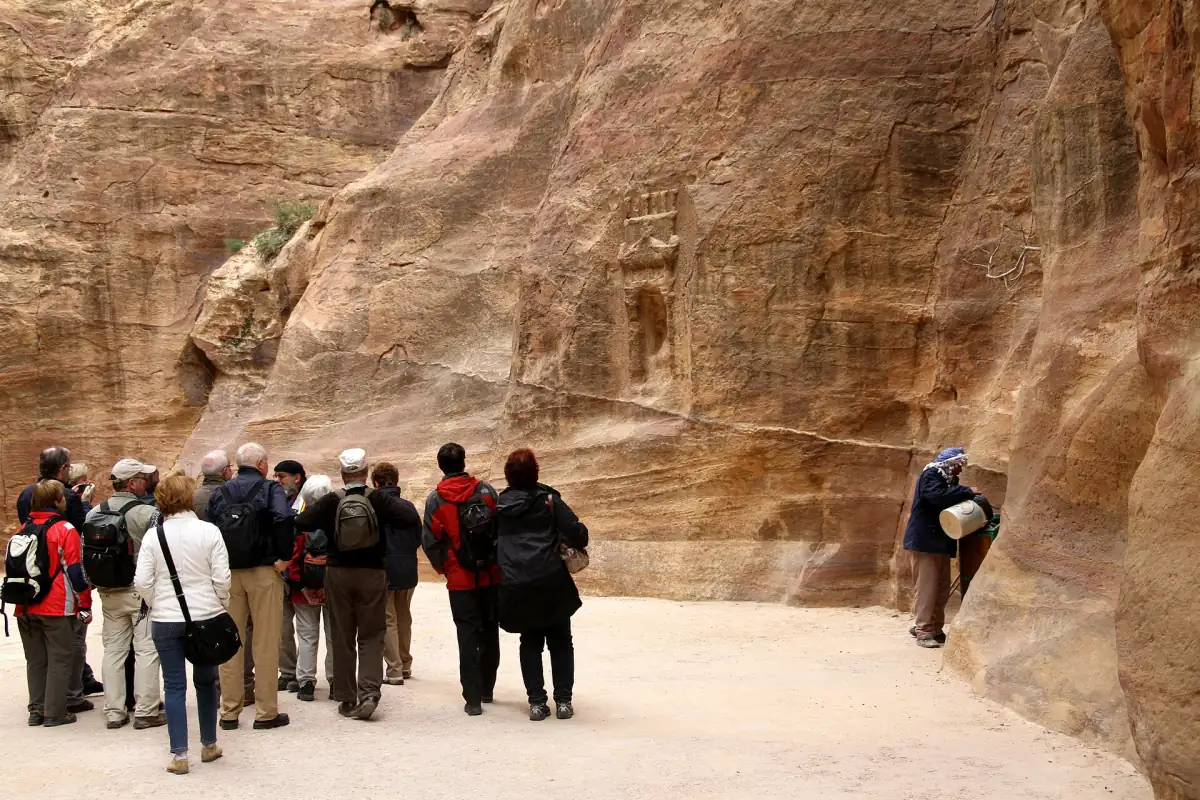
The rules at Petra protect the monuments. Do not climb or damage them, do not buy supposed antiquities, stones or coins, and stay on the main paths unless you are with a guide. The park must be left before sunset and overnight stays are not allowed.
If you want to see the history on the ground, begin with our tickets and opening hours page and the hiking trails guide. For an evening view of the Treasury, see Petra by Night.
Seeing the city center
The main trail ends at Qasr al-Bint, past the theatre and the Colonnaded Street. The city center can also be seen from above, for example from the Urn Tomb. Allow time for the entire route, because the distances are long: 3.9 km (2.4 mi) one way from the Visitor Center.
History of Petra: frequently asked questions
Who built Petra?
The Nabataeans, a trading people whose capital it was. No exact founding date is known.
When did Petra become part of the Roman Empire?
In 106 CE, when the emperor Trajan incorporated the Nabataean kingdom.
Was Petra lost until 1812?
No. Burckhardt made Petra known in the Western world in 1812, but local Bedouin had always known it.
Why did Petra decline?
A severe earthquake in 363 CE caused major destruction, and changes in trade also contributed. The decline was gradual.
Is the Treasury a treasury?
No. The official trail description points to a mausoleum function, possibly linked to Aretas IV, though that attribution is a hypothesis.
When did Petra become a World Heritage site?
UNESCO inscribed Petra in 1985.